
Creating a stunning painting composition isn’t just about the rule of thirds or following mathematical formulas. In fact, those rules aren’t very helpful, and can even harm your compositions, if you don’t understand the big underlying concepts of pictorial design.
A well-balanced composition draws viewers in, directs their eye through the piece, helps to tell a visual story, and makes the overall artwork much more compelling.
Yet, many artists struggle with composition. They tend to bumble about placing things on their canvasses awkwardly, and inevitably end up with paintings that feel like something is always “off”.
If this sounds familiar, you’re not alone. I’ve been teaching students realistic drawing and painting skills for more than a decade, and composition continues to be the most difficult aspect of painting for students to grasp.
Fortunately, mastering composition is possible with guidance from a knowledgeable atelier-trained instructor. So, let me be your guide today through the world of pictorial composition and let’s discover what good painting composition is, what it isn’t, and how to practice your composition skills effectively and elevate your art.
Mastering Painting Composition
Creating a strong composition is the foundation of compelling artwork. Whether you’re drawing a portrait, designing an outdoor plein air painting, or even arranging abstract forms, understanding composition helps guide the viewer’s eye and enhance visual impact.
The following key composition techniques offer a structured approach to building complex and visually engaging artworks. By practicing these methods, artists can develop a deeper understanding of how visual elements work together to create harmonious compositions. Mastering these principles allows for greater artistic confidence and the ability to communicate ideas more effectively – and intentionally – through art.

Sweeps & S-Curves
Sweeps and S-curves are powerful compositional tools that create movement and unity within a piece. By learning to recognize how flowing these implied curves lead the viewer’s eye through a composition, you can make your painting feel dynamic and cohesive.
Learn how to harness the natural elegance of curves to create rhythm and harmony in your artwork. Whether used subtly in a portrait, or prominently in a landscape, sweeps and S-curves are a useful tool for achieving a visually engaging composition.

Big Shapes & Spots
One of the most effective ways to simplify composition is by focusing on the big ideas, such as big shapes and spots. These concepts help students to identify dominant forms that establish structure and balance within an artwork.
By organizing a composition around major shapes before diving into details, artists can create a solid compositional foundation that delivers clarity for the viewer. Learning to place key shapes and focal spots strategically helps create compelling visual hierarchies, guiding the viewer’s attention carefully through the piece.
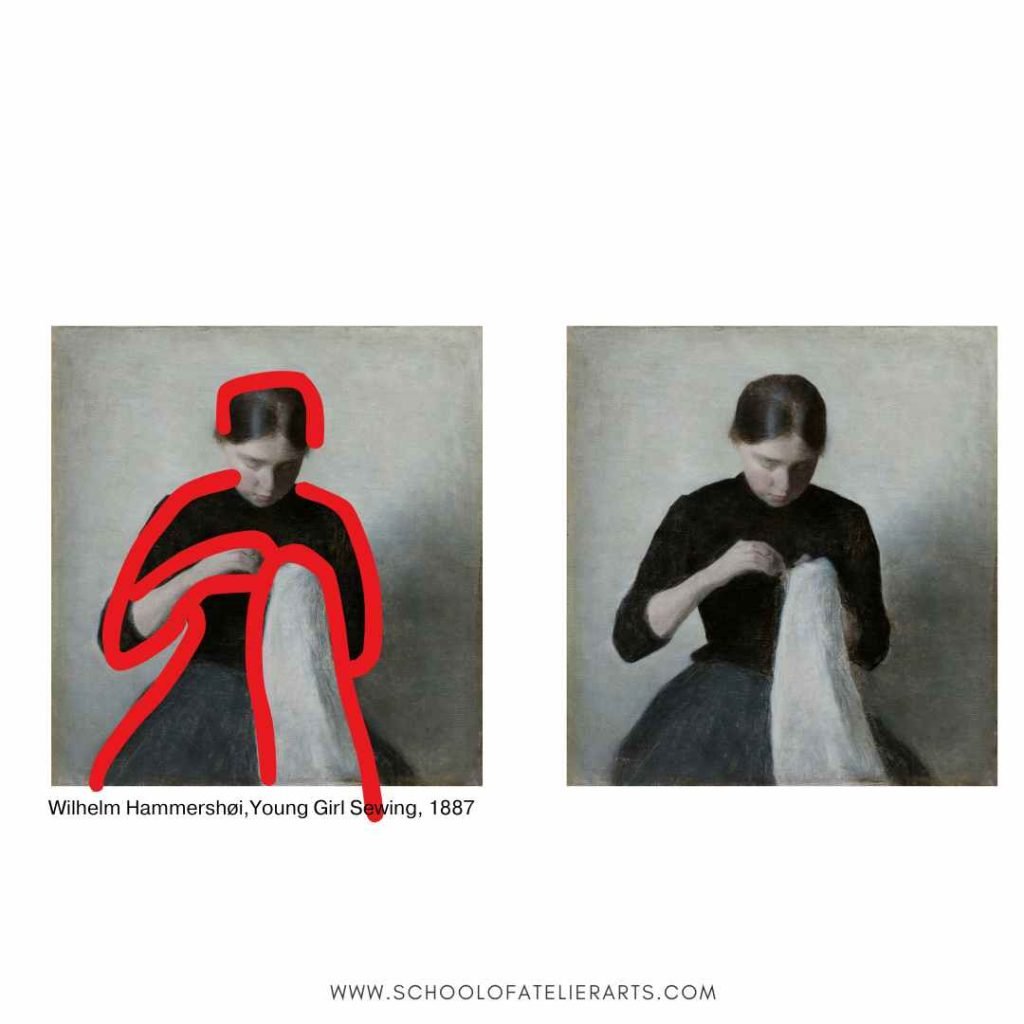
Designing with Edges & Silhouettes
Edges and silhouettes play a crucial role in how we read the big ideas of a composition. Edges and silhouettes can work to your benefit, or detriment if you are not careful.
If you want something to read cleanly and clearly, strong contrasts of light on dark or dark on light create clear edges.
If you want your subject to read calmly and mysteriously, low contrasts of light on dark or dark on light create subtlety and nuance in a painting composition.
Carefully placed edges and silhouettes create visual statements. By studying how two different colors meet (Softly? Harshly?), students can gain mastery and use edges and silhouettes to control the visual feeling of their compositions.
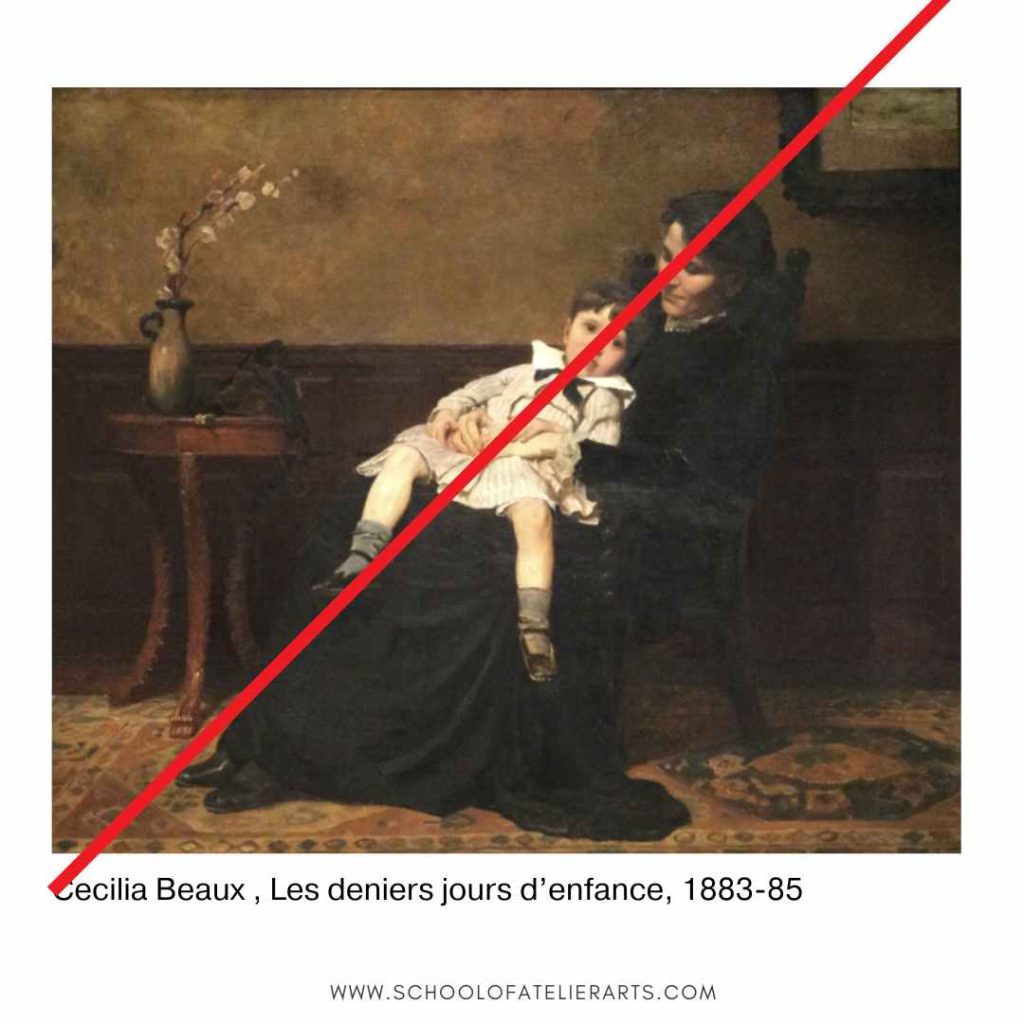
Linear Ideas in Painting Compositions
Understanding the power of lines in composition is fundamental to creating visually engaging artwork.
Sometimes the more subtle applications of this concept are difficult for students to see at first. Identifying and utilizing diagonal, vertical, horizontal, and converging lines in a composition creates visually effective structures in paintings.
Lines not only guide the viewer’s eye, but also establish guidelines for placing other elements in the composition.
Designing your painting composition around lines also contributes to the mood of your painting. Diagonal lines create energy and movement, verticals evoke strength and stability, while horizontals hint at calmness.
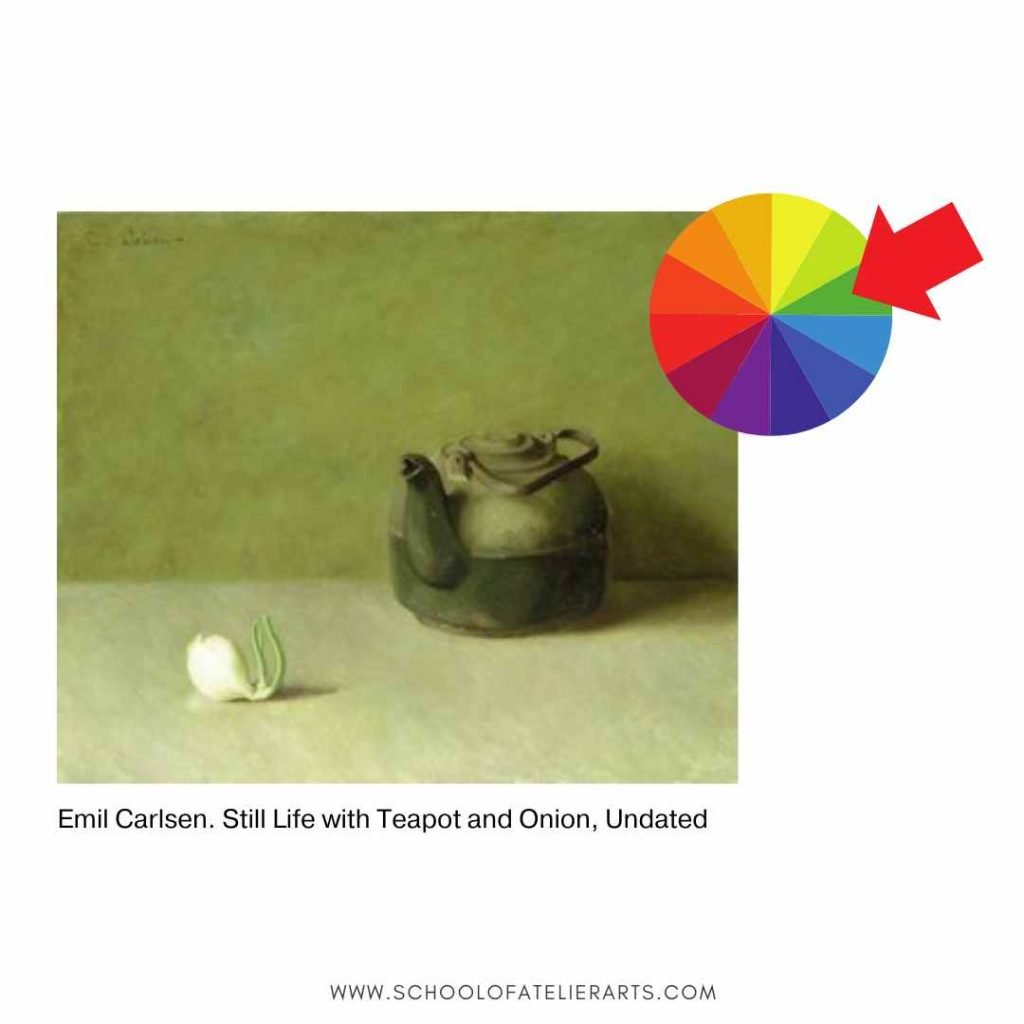
Color/Value of a Picture
Color and value are essential compositional tools that impact the overall feel and readability of an artwork. Students need to learn how to recognize and apply dominant color schemes and value structures to strengthen their compositions.
By understanding how a picture can be light, medium, or dark, artists can control the mood of their painting compositions.
By practicing identifying the overall color of a picture, students can manipulate their hues to evoke specific feelings from their viewing audience.
Mastering seeing a picture holistically, including its overall value and hue, allows artists to control the emotional and visual impact of their compositions with confidence.
Painting Composition: Putting It All Together
Mastering composition involves the ability to integrate multiple elements seamlessly. That’s why our popular Yay! Composition Worksheets have students practice each element individually, and then combine them together. By practicing the ideas presented in this article, artists can create compositions that are visually captivating.
Deliberate composition training ensures that students can apply their knowledge in real-world artistic scenarios, leading to more confident and effective artwork.
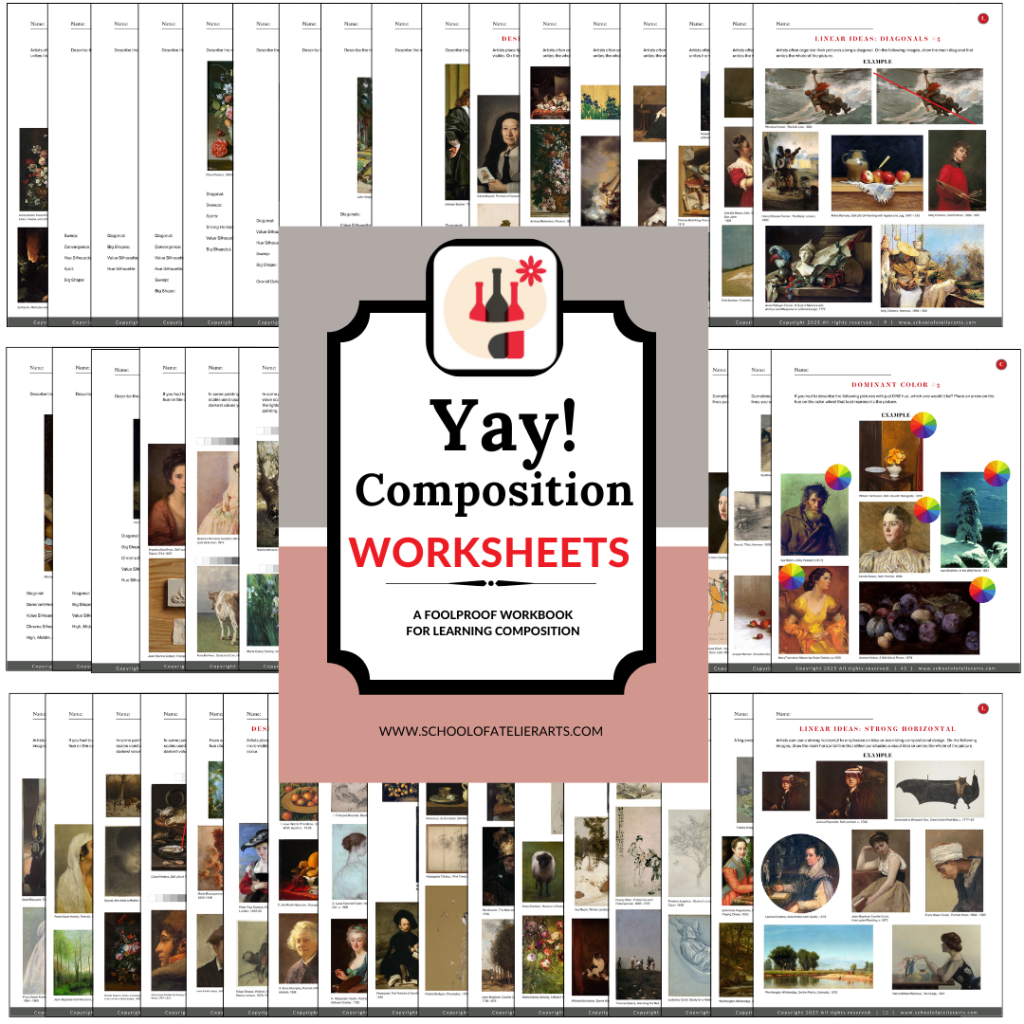
Why Artists Love our Yay! Composition Worksheets for Learning Painting Composition
Artists and educators alike have seen immediate improvements in their work using our popular worksheets. Here’s what some have said:
“My students were always intimidated to try and draw realistically. With the help of the School of Atelier Arts resources, I now know how to help them experience success with their drawings every time! Their confidence is through the roof!”
— Nina Dirienzo, High School Art Teacher
“I am extremely thankful for these resources because they offer skill-based lessons that give my students a strong foundation for their artworks.”
— Kelsea Fischer, Elementary Art Teacher
What’s Included in the Yay! Composition Worksheets?
When you purchase the Yay! Composition Worksheets, you get:
- 50+ digital worksheets that guide you through the composition process step by step.
- A Spanish translation for educators teaching bilingual students.
- A structured approach that makes learning composition easy and practical.
These worksheets are designed for artists of all skill levels, whether you’re a beginner struggling with composition or an experienced artist looking to refine your skills.
Start Creating Stronger Painting Compositions Today
If you’ve been struggling with composition, it’s time to stop guessing and start mastering it. The Yay! Composition Worksheets provide a clear, repeatable method that works every time. No more frustration. No more uncertainty. Just strong, confident compositions in every painting you create.
Get instant access to your digital worksheets:
➡️ BUY NOW
30-Day Money-Back Guarantee – If you don’t love the worksheets, we’ll give you a full refund. Simply write to help@schoolofatelierarts.com with your refund request, no questions asked.
Oil Paint Materials List
When starting out, having the right oil paint materials list is essential for creating successful artwork. So many students purchase inferior or unhelpful materials, sabotaging themselves and their artwork before they even start. Skip directly to the Oil Paint Materials List, or continue reading for contextual information about the materials. Introduction to Oil Painting Materials […]
Realistic Portrait Drawing
Realistic portrait drawing is one of the most rewarding yet challenging skills an artist can develop. Whether you are a beginner struggling with basic proportions, or an experienced artist looking to refine your technique, this article will help you to draw better realistic portraits. Capturing a likeness requires a solid understanding of structure, feature placement, […]
Guide to Black Oil Paints
Black is an essential color in any oil painter’s palette, yet not all black oil paints are the same. Different black oil paints offer different drying times and mixing behaviors that can greatly impact your painting. In this guide, we’ll explore the most common black oil paints, including Ivory Black, Lamp Black, Mars Black, and […]
Choosing the Right White: A Guide to White Oil Paints
White is the most used color in oil painting, but not all white oil paints are created equal. Artists often struggle to choose the right white for their work, as different types have varying properties that affect color mixing, drying time, and durability. In this guide, we’ll explore the most common white oil paints and […]
Articles Featuring School of Atelier Arts
Check out these articles featuring the School of Atelier Arts. Redfin This article draws on SAA Director Mandy Theis’ knowledge of setting up a studio. By intentionally controlling light the way we teach in our online Ateliyay! Painting Bootcamp, any content creator can have a more conducive place to work. 60 SHARES Share on Facebook […]
Art Podcasts
Are you a fan of audio learning and searching for some new great art podcasts? You’re in luck – here is a collection of art podcasts from a wide range of content creators. Art School Live Although technically more of a free online class/video format, this show makes for great listening if you are wanting […]





Leave a Reply