Realistic portrait drawing is one of the most rewarding yet challenging skills an artist can develop. Whether you are a beginner struggling with basic proportions, or an experienced artist looking to refine your technique, this article will help you to draw better realistic portraits.
Capturing a likeness requires a solid understanding of structure, feature placement, and head proportions.
And it also means ignoring silly rules that are often taken as inalterable truths. (Eyes halfway on the head anyone? Rarely is this true unless you are sitting eye height with your subject and facing straight on.)

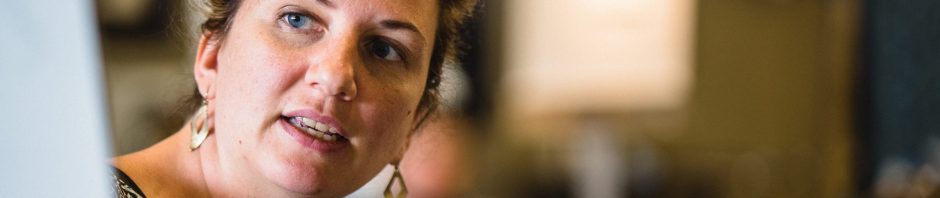
Portrait drawing by SAA Director Mandy Theis.
Many aspiring portrait artists find themselves frustrated when their drawings don’t resemble their subject, or feel “off” in ways they can’t quite pinpoint. This frustration is common because portrait drawing requires not just artistic inspiration, but also technical knowledge and deliberate practice. Without a clear process, mistakes like incorrect feature placement, wonky proportions, and awkward stiffness in the final portrait are inevitable.
But there’s good news: realistic portrait drawing is a teachable skill, and with the right approach, anyone can master it. You heard me. REALISTIC PORTRAIT DRAWING IS A LEARNED SKILL.
The reason many people believe they cannot draw well is because they have previously tried and it didn’t work out so well. But very few people have access to teachers that have portrait drawing skills. The problem wasn’t you. The problem is that you didn’t have access to someone with the skillset you wished to learn.
Lucky for you, I can teach you EXACTLY how to make realistic portraits. You can see my own portrait work on my Instagram @mandyfineartist https://www.instagram.com/mandyfineartist.
I am also a licensed art teacher. So not only do I know how to create realistic portraits, I know how to teach you efficiently how to make them too.
(In fact, helping people learn realistic portraiture is exactly why I created the Yay! Portraits Worksheets. These worksheets help artists overcome the most common struggles and make lifelike, accurate portraits with confidence.)
In this guide, we’ll explore the major challenges artists face when drawing portraits, the essential principles that lead to realistic results, and how structured practice can accelerate your portraiture drawing skills.
Why Realistic Portrait Drawing Feels So Difficult
Many artists, even those skilled in other areas, find portrait drawing uniquely challenging. That’s because the human face is deeply ingrained in our psyche—we are naturally wired to recognize faces and notice even the slightest inaccuracies. When something is off, we can sense it instantly, even if we don’t know exactly what went wrong.
Here are the most common reasons for portrait drawings fails:
1. Overall Head Proportions Are Inaccurate
The human head has a giant mass at the back of the skull that is bigger than the face portion of the head. But students often ignore this mass, essentially cutting off the entire back of the head which is still visible in a front facing portrait. Without understanding that this mass exists, and relating it to the proportions of the face, it’s easy to make the skull too wide, the forehead too small, or the chin too long. One of the most frequent mistakes beginners make is not correctly measuring the height-to-width ratio of the head, which results in absurdly placed features.
You can practice finding the mass of the back of the head with our Yay! Portrait Worksheets, like the sample worksheet below.

2. Feature Placement Destroys the Likeness
One of the biggest mistakes artists make is focusing too much on individual details—like a beautifully drawn eye or a well-rendered nose—without first ensuring that all features are placed correctly in relation to one another. LIKENESS IN A PORTRAIT COMES FROM THE FEATURES BEING THE CORRECT DISTANCE FROM EACH OTHER. Even if you perfectly render each feature, if their placement is off by just a little bit, the portrait won’t look like the subject.
For example:
- Eyes that are even slightly too high or too far apart will make a face look like somebody else.
- A nose that’s just a fraction too low can make the subject look older than they really are.
- A misplaced mouth can completely change the expression, making the portrait feel “wrong.”
- Misaligned features make the head feel like it is turning in different directions within the same portrait.
This is why getting feature placement right from the start is essential for capturing a likeness.
If your drawing looks “off,” chances are it’s a feature placement issue, not a rendering issue. Even slight misplacements can destroy a likeness, so it’s crucial to observe and measure distances between features carefully.
While placement “rules” about the eyes being halfway on the head can help establish general structure, be wary of the many dubious rules batted about in drawing books about the heights, widths, and general locations of individual facial features.
Some people have wide-set eyes, others have narrow noses, and lips come in countless shapes and sizes. This is what makes each face unique. Instead of following rigid formulas, artists must train their eyes to observe these variations and adjust their drawings accordingly. Capturing these subtle differences is what truly brings a portrait to life.
In fact, all of these so-called “rules” are mostly nonsense. They represent an idealized version of a human face—one that almost no real person actually matches exactly. If you try to force every face into these proportions, you’ll end up with generic portraits that fail to capture the unique individual qualities of your subject.
Instead, use the ideal figure as a reference point to analyze how your subject deviates from the idealized version. Is their nose slightly shorter? Are their eyes wider apart? Does their chin extend lower than the “right” proportions suggest? Recognizing and emphasizing these differences is what makes a portrait look like the actual person rather than just another generic face.
Getting the relationship of features to each other right is one of the hardest things for students to learn. It takes a lot of practice to get it right. It also helps to have a system, like what I teach in the online Ateliyay! Painting Bootcamp, to get it right.
I also teach this system for feature relationships in our Yay! Portrait Worksheets like the one you see below.

3. The Angle and Gesture of the Head Are Incorrect
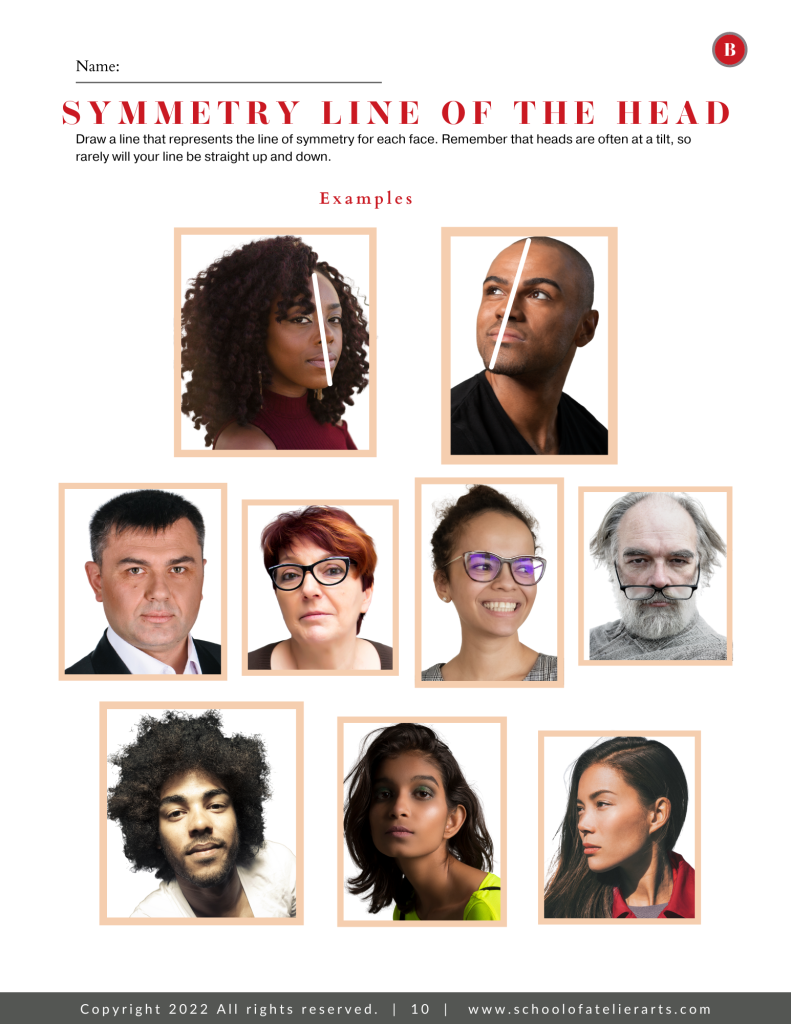
A common reason portraits feel “off” is that the tilt or angle of the head hasn’t been properly established. Even a small mistake in the tilt of the brow line, nose, or mouth can create an unnatural or distorted look. The head is rarely perfectly straight-on, so artists must learn to accurately depict head angles to create believable portraits.
Our Yay! Portraits Worksheets help train artists to identify and accurately draw these head directions.
Want to to be better at realistic portrait drawing? You need a structured approach.
The key to improving portrait drawing is not just more practice—but the right kind of practice. Instead of drawing the same way as always, while making the same mistakes over and over, artists need a step-by-step process that teaches them how to analyze, construct, and refine portraits that actually look like the person they are trying to draw.
That’s where the Yay! Portraits Worksheets come in. These worksheets provide a systematic approach to portrait drawing, covering essential techniques that eliminate guesswork. By following guided exercises, artists can build their skills faster and with greater accuracy.
What Makes the Yay! Portraits Worksheets So Effective?
1️⃣ Mastering Overall Head Proportions – Learn the rules of facial symmetry, spacing, and the skull’s structure to ensure every portrait starts with a solid foundation.
2️⃣ Getting Feature Placement Right – Follow a structured method to correctly position eyes, nose, mouth, and ears to ensure accuracy and likeness.
3️⃣ Understanding Head Angles – Learn how to construct heads at different angles so portraits feel natural and not awkward or stiff.
4️⃣ Focused Practice – Each worksheet targets specific problem areas, so you improve efficiently without getting overwhelmed.
Unlike simply copying a reference photo, these worksheets teach you how to “see” like an atelier-trained artist.
Start Drawing Realistic Portraits Today!
If you’re tired of struggling with portraits that don’t quite look right, you don’t have to keep guessing. With the Yay! Portraits Worksheets, you’ll get the exact step-by-step guidance you need to start drawing realistic, lifelike portraits right away.
📥 Download the Yay! Portraits Worksheets now and transform your portrait skills today!
Your best portraits are just a few practice sessions away.
Want more?
If you are ready to take you and your art seriously, the best way to learn how to draw is under an atelier-trained artist. That is what our online Ateliyay! Painting Bootcamp gives you. You will get to practice your portraiture under the guidance of a true expert. Learn more about our online Ateliyay! Painting Bootcamp here.